- BlackVoter.Org
- Posts
- BlackVoter.Org
BlackVoter.Org
From Katrina to today's ballot fights: our history, our power, our vote. Here's what's at stake this week.

BlackVoter.org
September 03, 2026


Tarrant County Honors Charlie Kirk: Whos Being Left Out of the Room
Tarrant County's Commissioners Court just voted to honor a conservative activist who was killed last year, and the decision didn't come without a fight. Democratic commissioners pushed back hard, questioning why county resources and public recognition were being used to memorialize someone whose politics many of their constituents found harmful, if not outright hostile to civil rights progress. This isn't just about one resolution or one name on a plaque. It's about who gets remembered, who gets erased, and who decides. Local government moves like this happen quietly, often without the spotlight of a presidential election, but they shape our communities just as much, sometimes more. We've seen this movie before: history gets rewritten in county chambers, school boards, and city councils while everyday folks are focused elsewhere. That's exactly why local elections matter so much for us. Who sits on your commissioners court? Who represents your district? These are the people making decisions about whose legacy gets honored and whose gets ignored. Here's your move: find out who your county commissioners are today. Check their voting records. Show up to a public meeting, even once. Register to vote if you haven't, and make sure your neighbors do too. Local accountability starts with local attention. Tarrant County won't be the last place this fight plays out, so let's make sure we're paying attention everywhere it does. Our history, our representation, our vote.

Our History, Our District, Our Vote Fight Back Now
Let's talk about Louisiana's Congressional District 6 — because this map tells a story bigger than lines on paper. It's about Black communities stitched together by shared history, shared struggle, and a decades-long fight to make sure our votes actually translate into real representation. For years, Louisiana's political maps diluted Black voting power, splitting our communities across districts so no single one could elect a candidate of our choice. District 6 changed that. By connecting Black neighborhoods from Baton Rouge to Shreveport, this district finally reflects the reality that our communities, though miles apart, share common ground — economic struggles, access to healthcare, education gaps, and a history rooted in the fight for civil rights. This didn't happen by accident. It happened because organizers, legal advocates, and everyday citizens pushed back against unfair maps and demanded accountability. That's the legacy we're standing on — the same one that fueled the Voting Rights Act and generations of Black political organizing across the South. But representation on paper means nothing without participation at the polls. A fair district only works if we show up. So here's your charge: check your voter registration status today. Confirm your district. Learn who's running to represent you. And don't just vote — hold your elected officials accountable once they're in office. Redistricting battles like this remind us that representation is never guaranteed — it's fought for, district by district, election by election. Louisiana's District 6 is proof of what's possible when we organize. Now it's on us to keep showing up and keep pushing forward.


Loomer's Racist Attack on Black Women Leaders Demands Our Response
We need to talk about what happened this week, because silence isn't an option when someone with a platform uses their voice to tear down Black women in public life. Far-right commentator Laura Loomer went on a tirade, calling Black women "ghetto, entitled, race-obsessed" and "destructive." Let's be clear: this isn't new. This is the same old playbook — dehumanizing language designed to silence Black women who dare to lead, speak up, and demand better for our communities. From Fannie Lou Hamer to Shirley Chisholm to the Black women organizing in your neighborhood right now, this rhetoric has always tried to paint our voices as too loud, too much, too threatening. But history shows us something else: Black women have been the backbone of this democracy, often doing the work of saving it when others wouldn't. So what do we do with this moment? We don't just get angry — we get active. Call out this language when you see it, whether it's on your timeline or in your local paper. Support the Black women running for office in your community, from school boards to Congress. Register to vote if you haven't. Check your voter registration status today, especially if you've moved recently. And talk to your family about why representation matters — not as an abstract idea, but as protection against exactly this kind of attack. We can't control what people like Loomer say. But we can control who holds power, who gets elected, and who gets held accountable. That's on us. Let's get to work.

Kendrick Lamars Reach Goes Global Even Troops Are Vibing With Us
Kendrick Lamar just proved something we've always known: Black art doesn't stay in one zip code, one country, or one culture. It travels. It moves people. It even shows up in the mouths of South Korean soldiers, who recently performed two of Kendrick's biggest hits for their fellow service members. Watch the clips, and you'll see the same energy, the same passion, the same fire that fills arenas here at home. This matters more than it might seem. When Black voices, Black stories, and Black creativity reach across oceans and languages, that's representation doing exactly what it's supposed to do — building bridges, sparking connection, and reminding the world that our culture carries weight far beyond entertainment. But let's not stop at admiration. Let's talk legacy. Kendrick's music has always carried a message about accountability, community, and truth-telling. That's the same energy we need to bring into our own neighborhoods, city halls, and voting booths. If a Pulitzer Prize-winning artist can move soldiers halfway across the world to sing his words, imagine what we can move right here when we organize, register, and show up. So here's your call to action this week: register to vote if you haven't. Check your voter registration status. Show up to a local school board or city council meeting. Hold your leaders accountable the same way Kendrick holds a mirror up to all of us. Culture opens doors. Civic engagement walks us through them. Let's keep pushing.
Florida's SAVE Act Copycat Faces Court Fight Protect the Vote
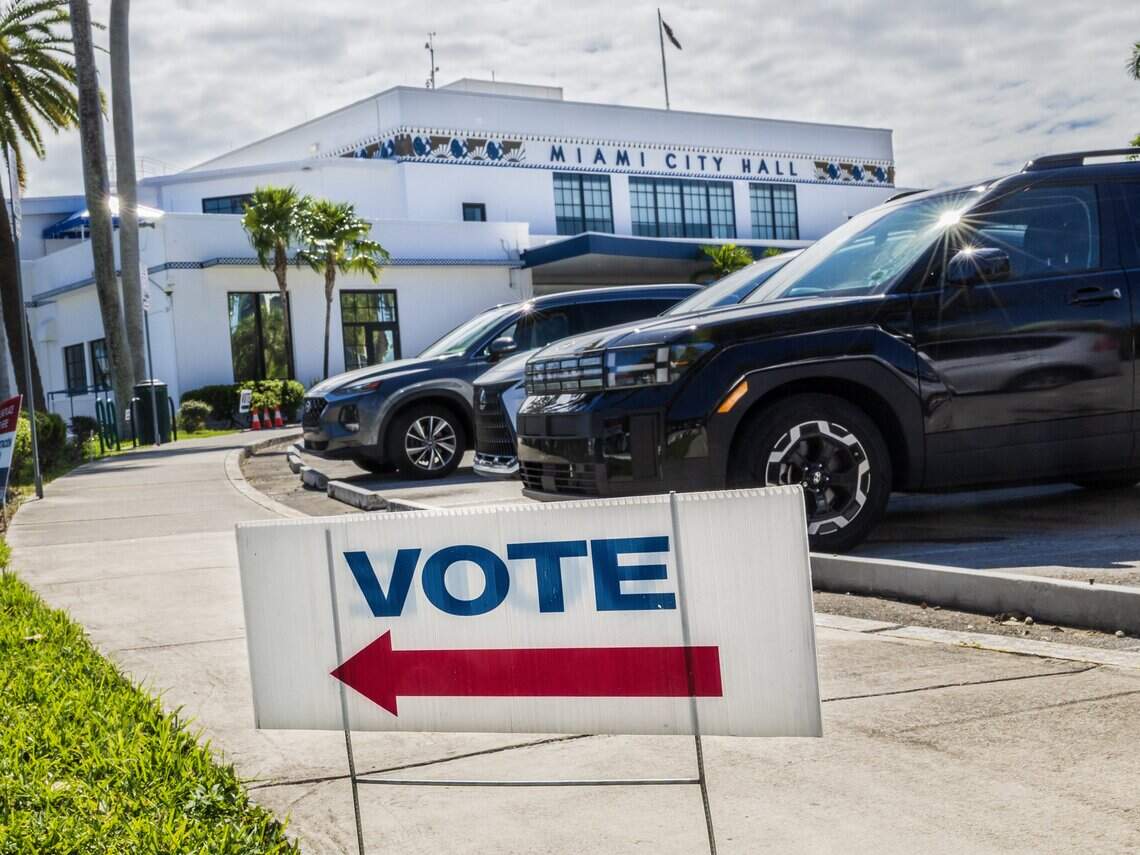
Picture this: a simple "Vote" sign standing outside Miami City Hall, welcoming folks who showed up during early voting for the November 4th municipal elections. It's a quiet image, but it carries the weight of generations who fought — and died — for the right to walk up to that sign and cast a ballot. Local elections like Miami's don't always grab national headlines, but they shape our everyday lives. City commissioners, mayors, and local leaders decide how our neighborhoods get policed, how our schools get funded, and whether our communities get real investment or empty promises. This is where accountability starts — right in our backyard. Early voting exists because our ancestors demanded it. Poll taxes, literacy tests, and violence once stood between Black voters and the ballot box. Today, the barriers look different — confusing rules, limited polling hours, misinformation — but the mission stays the same: show up, use your voice, hold power accountable. So here's our charge to you: don't sleep on municipal elections. Check your registration status. Find your early voting location. Bring a friend, a cousin, a neighbor. Ask your local candidates what they're doing for Black communities specifically — not just what sounds good in a stump speech. Every vote in Miami, and in cities like it across the country, sends a message that we're watching, we're organized, and we expect results. Our legacy isn't just about remembering the struggle — it's about continuing the work. Get informed. Get registered. Get to the polls. The sign says "Vote" — let's make sure we answer that call.

Black Voters, What's the Real Ask Beyond Buttigieg?
Let's talk about South Carolina, Pete Buttigieg, and what it really means when Democrats start eyeing our vote as the "key" to winning. Here's the truth: if a candidate believes courting Black South Carolinians is the golden ticket to victory, then we need to be crystal clear about what we're actually asking for in return. Not just a photo op. Not just a speech at a Black church. Real policy. Real investment. Real accountability. Our history teaches us this lesson again and again — from Reconstruction to the Civil Rights Movement to every election cycle since. Black voters have long been the backbone of political coalitions, especially in the South, yet too often we're treated as a bloc to be won rather than a community to be served. South Carolina's Black electorate helped shape the outcome of past presidential primaries. That kind of power demands respect, not just recognition. So here's the move: don't wait for candidates to define what we want. Define it ourselves. Show up to town halls. Ask direct questions about economic policy, healthcare, education, and criminal justice reform. Demand specifics, not vibes. Hold every candidate — Buttigieg included — to the same standard we'd hold a preacher, a teacher, or a neighbor: are you doing right by us? Register to vote if you haven't. Check your registration status today. Talk to five people in your circle about the stakes this election cycle. Our ancestors fought for this ballot. Let's use it like it matters — because it does.

21 Years After Katrina: Remember What Kanye Got Right
Twenty-one years ago, a young Kanye West stood on live television during a Hurricane Katrina relief telethon and said what millions of us were thinking: "George Bush doesn't care about Black people." No teleprompter, no filter — just raw truth born from watching our people abandoned on rooftops while help crawled in too slow, too late. That moment wasn't about celebrity outrage. It was about accountability, plain and simple. Look back now, and it hits different. Before MAGA hats and confusing political detours, this was a Kanye centered on Black inequality, unafraid to name the failure of leadership when it mattered most. Katrina wasn't just a natural disaster — it was a man-made catastrophe of neglect, revealing how quickly our communities get left behind when the levees break, literally and politically. Here's why we're bringing this up now: history doesn't stay in the past unless we let it. The same systems that failed New Orleans can fail our cities again — during hurricanes, floods, or any crisis — if we're not watching who's in charge. So let's turn that old anger into action today. Check your local emergency preparedness plans. Show up to city council meetings. Vote in every election, not just the presidential ones — mayors, sheriffs, and school boards shape our daily survival. Register your family and neighbors now, don't wait for the next disaster. Kanye said it loud in 2005. Let's make sure our ballots say it louder in 2025. Our voices, our votes, our legacy.