- BlackVoter.Org
- Posts
- BlackVoter.Org
BlackVoter.Org

BlackVoter.org
December 26, 2025


In a bold critique, David Kaufman argues that Candace Owens’ recent attack on Ben Shapiro is not only deeply troubling but also fundamentally racist. 🚨 Owens, a right-wing provocateur, has escalated her rhetoric against Shapiro—who is proudly Jewish—amidst rising tensions at a recent Turning Point USA event.
🗣️ Kaufman highlights Owens’ inflammatory comments, which accuse Jews of historical wrongdoings and attempt to frame Shapiro as a traitor to Black Americans. 💬 He asserts her language is both intentionally provocative and harmful, as it incites racial animosity and perpetuates antisemitic tropes.
This shift in Owens’ narrative contradicts longstanding beliefs about racism and power dynamics, as she leverages her platform to promote division. ⚠️ Kaufman contends that her actions reflect a troubling new wave of racialized antisemitism that deserves serious attention and condemnation.
🛑 He challenges the notion that only traditional power holders can be racist, emphasizing the importance of accountability. 📢 This piece serves as a wake-up call about the complexities of contemporary racism and the dangers of unchecked rhetoric in today’s political climate.


On December 26, 1908, boxing history was made when Jack Johnson 🥊 captured the world heavyweight championship, becoming the first Black champion by defeating Canadian boxer Tommy Burns 🇨🇦 in Sydney, Australia. Johnson's victory was not just a personal triumph; it was a groundbreaking moment for Black athletes, paving the way for future icons like Muhammad Ali 🥇 and Colin Kaepernick, who have used their platforms for social change.
✊
The date is also marked by other significant events throughout history, including Winston Churchill addressing the U.S.
Congress 🇬🇧 in 1941, just weeks after Pearl Harbor, and the dissolution of the USSR in 1991. As we reflect on December 26, we not only celebrate Johnson's remarkable legacy 🎉, but we also honor the ongoing fight for equality and justice that has echoed through the decades.
This day reminds us how sports can transcend boundaries and inspire societal progress.

Former President Donald Trump recently claimed that Christians in Nigeria are facing severe persecution 😢, citing deadly violence from militant groups like Boko Haram targeting believers. However, the reality appears more complex upon deeper examination 🔍.
While Trump and some U.S.
politicians assert alarming figures—such as 100,000 Christians killed since 2009—research from reputable organizations suggests a more nuanced picture 📊, indicating that most victims of such violence are, in fact, Muslims. The Nigerian government contends that attacks are driven by broader terrorist agendas rather than a religious crusade 🚫✝️.
Additionally, groups like the International Society for Civil Liberties, which provide troubling statistics 📈, face scrutiny for lack of transparency regarding their data sources. Other monitoring bodies, like ACLED, report significantly lower death tolls and emphasize the multi-faceted nature of violence in Nigeria 🌍, attributing it to ethnic conflicts and resource competition rather than purely religious motives.
In this context, claims of systematic persecution of Christians may not accurately represent the situation on the ground ⚖️.
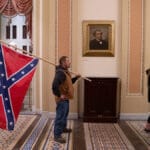
On Christmas Day 🎄 in 1868, President Andrew Johnson granted a sweeping amnesty to former Confederate officials and soldiers, effectively putting an end to their legal consequences following the Civil War ⚔️. This pivotal moment, while historical, continues to echo in today's political landscape, particularly when discussing presidential pardons tied to political violence 🔍.
Johnson’s action not only curtailed Reconstruction but also facilitated a quick return of many Confederates to political power 🏛️—a theme that finds resonance in contemporary debates over clemency, like those surrounding the January 6 Capitol insurrection 🏢. Critics worry that such pardons erode trust in democracy 🤔, while supporters view them as essential for national healing 🤝.
Johnson's Christmas proclamation serves as a lens through which current politicians assess the balance between forgiveness and accountability ⚖️, revealing that the nuances of political strategy, trust, and values are as relevant today as they were over a century ago. Ultimately, this historical reference invites ongoing reflection on the long-term impacts of actions taken in the name of reconciliation ✨.
In a bold move reflecting the voice of the people, a recent poll reveals that over 80% of Michigan voters are throwing their support behind the Michiganders for Money Out of Politics (MMOP) initiative 🗳️. This grassroots effort seeks to ban major corporate donors, including utility giants like DTE Energy and Consumers Energy, from making political contributions 💰, a practice many believe undermines democracy.
The initiative aims to ensure that corporations with significant state contracts can no longer influence lawmakers with hefty donations.
With a survey conducted among nearly 800 voters, the message is clear: Michiganders are fed up with corporate power overshadowing their voices in government 📢.
As soaring energy costs weigh heavy on households ⚡, advocates like Ken Whittaker and Christy McGillivray emphasize the need for transparency and accountability in campaign finance 🕵️♂️. The MMOP campaign is actively gathering signatures to place this critical proposal on the 2026 ballot 🗓️, striving for a future where democracy prioritizes the citizens over corporate interests 🤝.

On December 25, 1956, Rev. Fred Shuttlesworth's home in Birmingham, Alabama, was bombed by segregationists, a shocking act meant to intimidate the civil rights leader 💥.
Just days after announcing plans to desegregate the Birmingham Transit Company 🚌, dynamite was placed beneath his bedroom, leading to a miraculous escape with only a minor injury 🙏. This pivotal moment transformed Shuttlesworth's resolve; as he later stated, fear left him entirely 💪.
His survival was seen as a sign from God, fueling his dedication to the civil rights movement ✊. Credited as a founder of the Southern Christian Leadership Conference, Shuttlesworth was revered by leaders like Martin Luther King Jr.
, who hailed him as the "most courageous civil rights fighter in the South" 🌟. Throughout his life, he faced numerous threats, arrests, and violence 😢 yet remained a stalwart advocate for justice until his death in 2011.
Shuttlesworth’s fearless spirit paved the way for significant advancements in civil rights, leaving a lasting legacy 📜.